The Montessori Method: A Foundation for Lifelong Learning
Developed by Dr. Maria Montessori, Italy’s first female physician, this educational approach is rooted in a profound respect for a child’s natural desire to learn. Rather than following a rigid, "one-size-fits-all" curriculum, Montessori empowers children to become the architects of their own development through three core elements:
1. The Prepared Environment
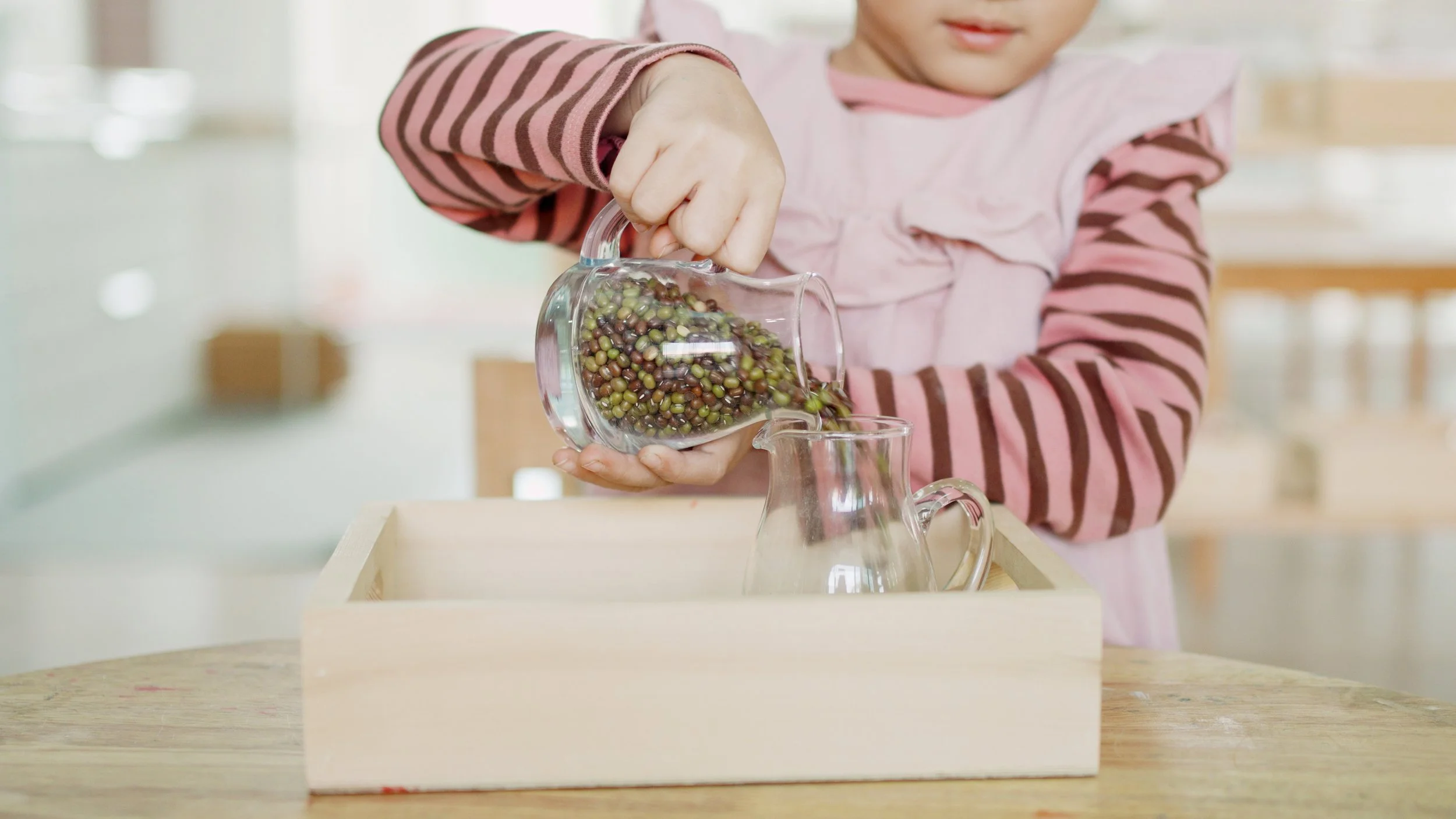
The classroom is a curated space where every material is designed to spark curiosity and meet a specific developmental need. Here, learning is a sensory experience. Children do not just memorize abstract concepts; they see, touch, and manipulate them. This hands-on exploration builds a bridge between physical action and cognitive understanding, leading to deeper retention and genuine confidence.
2. Freedom Within Limits
In a Montessori setting, independence is nurtured through choice. Within a structured framework, children are free to select work that captivates them. This autonomy fosters:
Deep Concentration: The ability to lose oneself in a task without interruption.
Self-Discipline: Learning to navigate a social environment with grace and courtesy.
Intrinsic Motivation: A love of learning that comes from within, rather than from external rewards or grades.
3. The Guide, Not the Lecturer
The educator’s role is one of an "active observer." Instead of standing at the front of a room delivering a lecture, the Montessori guide moves through the classroom, offering individual lessons and supporting each child's unique pace. They ensure that every student remains challenged yet supported, keeping them on a steady path of growth.
The Big Picture: Montessori is more than a teaching method; it is a philosophy of life. By nurturing a child’s natural curiosity and sense of self, it prepares them to navigate the world as confident, capable, and compassionate lifelong learners.